When Do Babies Start Crawling?
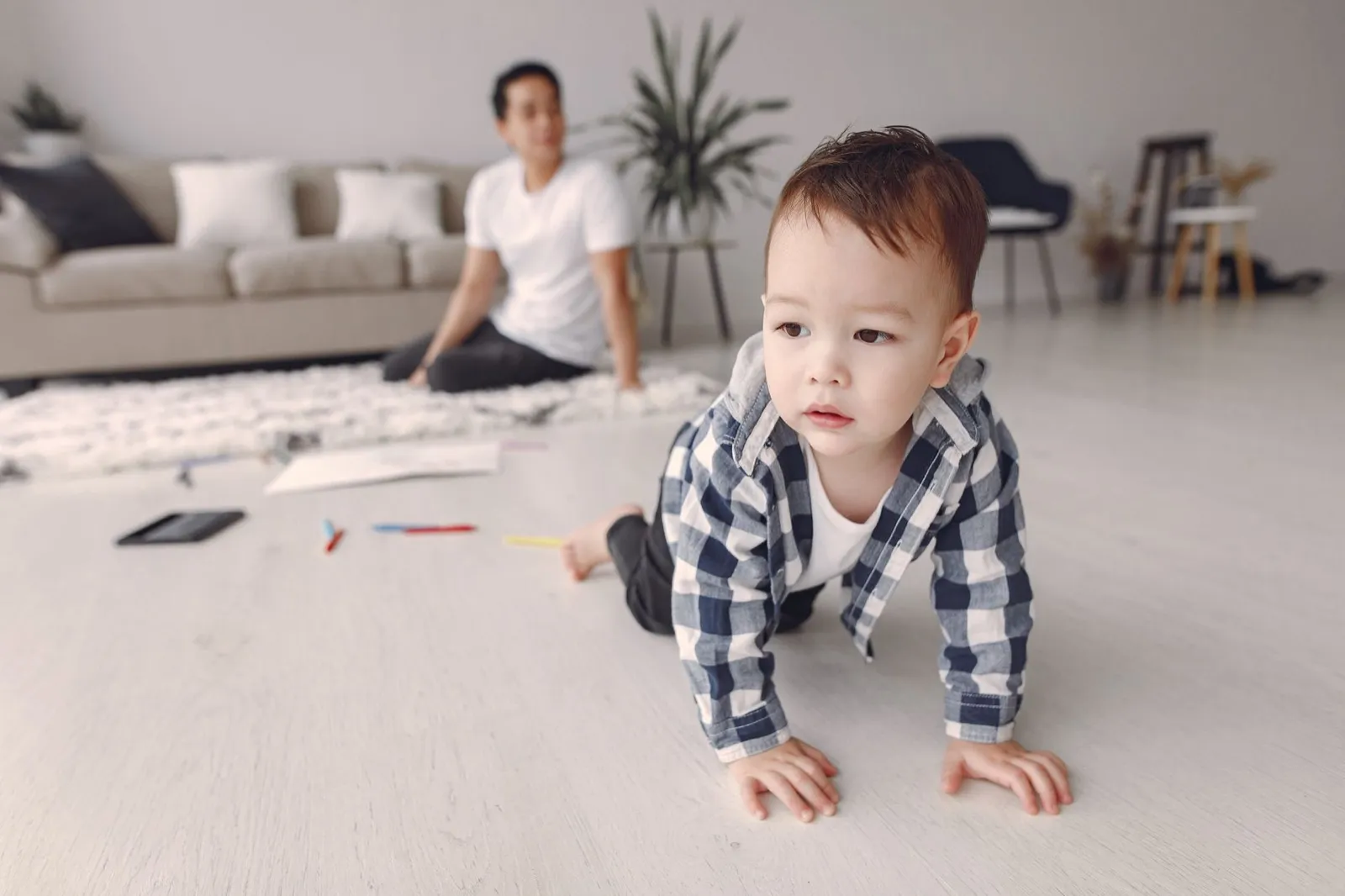
Image Credit: Pexels / Gustavo Fring
Many babies start crawling at around 7 to 10 months, according to the NHS, but there is a wide range of normal development. Some babies crawl earlier or later, while others never crawl in the traditional hands-and-knees way at all.
Your baby might bottom shuffle, move backwards, wriggle on their tummy or find another way to get around before eventually walking. The NHS specifically notes that not all babies crawl.
So if you are watching and waiting for that first crawl, try to look at the bigger picture. Crawling is one possible part of your baby’s developing mobility, not a test they have to pass by a particular date.
What age do babies usually start crawling?
The NHS says babies may start crawling at around 7 to 10 months.
That is a useful guide rather than a deadline. Babies develop physical skills at different rates, and the exact way they become mobile varies too.
Interestingly, crawling does not appear as a developmental milestone on the current US Centers for Disease Control and Prevention milestone checklists. At 9 months, the CDC instead looks at skills including getting into a sitting position and sitting without support. By 12 months, physical milestones include pulling up to stand and walking while holding onto furniture.
This reflects an important point: crawling is not a universal stage that every baby must complete in the same way.
If your baby is not crawling while another child of the same age is racing across the room, that difference alone does not tell you that anything is wrong.
What happens before crawling?
Crawling relies on a combination of strength, balance, coordination and curiosity.
Long before your baby moves across the floor, you may notice them developing physical skills that help prepare their body for greater mobility.
These can include:
- stronger head and neck control
- pushing up during tummy time
- rolling
- sitting with increasing confidence
- reaching towards interesting objects
- turning and pivoting while on the floor
- moving their arms and legs purposefully
- shifting their weight from one side to another
At around 6 months, the CDC lists pushing up with straight arms while on the tummy and leaning on the hands for support while sitting among common physical milestones.
By 9 months, getting into a sitting position and sitting without support are among the physical milestones.
Your baby may use these developing abilities in their own combination as they work out how to move.
Signs your baby may be getting ready to crawl
There is no reliable countdown to crawling, but some changes can suggest that your baby is becoming more interested in moving independently.
You may see them:
- reaching further for toys
- turning their body while sitting
- rocking or shifting their weight
- pushing their upper body away from the floor
- trying to move towards an interesting object
- pivoting while lying on their tummy
- getting frustrated when something is just out of reach
- experimenting with different positions on the floor
Some babies briefly move backwards before they work out how to go forwards. Others develop an entirely different way of travelling.
Rather than trying to predict the first crawl, give your baby safe opportunities to experiment with movement.
Do all babies crawl on their hands and knees?
No. Babies can become mobile in several different ways.
The familiar image is a baby moving forwards on both hands and knees, but real-life movement can look much more varied.
Some babies bottom shuffle. Others move on their tummy, roll towards what they want or develop another method that works for them.
The NHS notes that not all babies crawl, with some bottom shuffling instead.
This means there is no need to correct your baby’s movement simply because it does not look like another baby’s crawl.
If you are concerned about the way your baby moves, particularly if they appear to use one side of their body very differently from the other, speak to your health visitor or GP.
Can a baby skip crawling completely?
Yes. Some babies do not crawl before they begin pulling up, standing and eventually walking.
Crawling is not included in the CDC’s milestone checklists for either 9 months or 12 months. At 12 months, the CDC lists pulling up to stand and walking while holding onto furniture as physical milestones.
The NHS also states that not all babies crawl.
That does not mean crawling has no developmental value. Moving around the floor can give babies opportunities to explore, coordinate their bodies and become more independent. It simply means that a traditional crawl is not a compulsory milestone for every child.
Look at your baby’s development as a whole rather than focusing on whether they have completed one particular movement pattern.
How tummy time supports early movement
Tummy time helps babies strengthen muscles they will later use for physical skills.
The NHS recommends tummy time while babies are awake and supervised, explaining that it helps build the muscles needed for sitting and crawling.
During tummy time, your baby can practise lifting their head, pushing through their arms, reaching and shifting their weight.
If your baby dislikes being directly on the floor, NHS guidance suggests trying tummy time on your chest or lap. Talking, singing or placing toys within easy reach may also help make it more interesting.
There is no need to turn tummy time into a battle. Short opportunities throughout the day can be easier for some babies.
How to encourage crawling naturally
You cannot make your baby crawl before they are developmentally ready, and there is no reason to rush them.
What you can provide is space and opportunity.
The NHS recommends encouraging babies who are not yet crawling to be physically active by reaching, grasping, pulling, pushing and moving their head, body and limbs during daily routines and supervised floor play.
You might:
- give your baby plenty of safe floor space
- continue supervised tummy time
- put an interesting toy a little way in front of them
- allow them to reach and change position
- sit nearby and interact while they explore
- give them time to work out movement without constantly repositioning them
If a toy is too far away and your baby becomes upset, simply move it closer. The aim is playful exploration, not making them work for everything they want.
Why floor time is useful
Floor time gives babies freedom to move in ways that are difficult in seats or other equipment.
They can roll, reach, turn, push and experiment with balance on a stable surface.
NHS physical activity guidance recommends that babies who are not yet mobile are encouraged to be active throughout the day, including through supervised floor play.
The same guidance advises that babies should not spend long periods restrained in equipment such as buggies, car seats or highchairs when there is no practical need.
This does not mean you should feel guilty whenever your baby is in a seat or pushchair. These are normal and useful parts of everyday family life. The practical aim is simply to include opportunities for free movement too.
Babyproofing before crawling begins
Your baby does not need to be crawling yet for you to start thinking about babyproofing.
New mobility can arrive quickly. A baby who could only reach what was directly beside them may suddenly be able to travel towards a cable, cupboard or staircase.
The NHS recommends fitting safety gates to stop babies getting onto stairs and keeping medicines, cleaning products and other hazardous substances out of sight and reach.
It also advises covering electrical sockets that are in use with furniture or using appropriate safety measures where needed, and keeping small objects that could cause choking out of reach.
Look at the space from floor level. Items that seem uninteresting or inaccessible to an adult can become very appealing once a baby starts exploring.
Preparing before the first crawl means you are less likely to be rearranging the room while your newly mobile baby is already testing every boundary.
What happens after crawling?
Once your baby becomes mobile, their physical development continues.
They may move between sitting and crawling, use furniture for support or start experimenting with pulling themselves upright.
By 12 months, the CDC lists pulling up to stand and walking while holding onto furniture among common physical milestones.
Independent walking may come later. There is no need to encourage your baby to race from crawling to standing or walking.
Let them practise the skills they are currently working on while providing a safe environment for movement.
What if my baby crawls backwards?
Moving backwards can be part of a baby’s experimentation with movement.
Your baby is learning how different movements of their arms, legs and body affect where they go. The first successful movement may not take them in the direction they intended.
Give them space to practise rather than trying to manually position their arms and legs into a particular crawling pattern.
If you are worried about how your baby moves, however, ask your health visitor or GP to look at their development rather than relying on online comparisons.
What if my baby is not crawling?
If your baby is not crawling at 9 or 10 months, remember that crawling is not a milestone every baby has to achieve.
Some babies become mobile later. Others use different methods of getting around, and some move towards standing without ever developing a traditional crawl.
Instead of looking at crawling alone, consider your baby’s overall physical development. Are they gaining control of their body? Are they developing new ways to change position, reach and explore?
If your baby is not showing signs of becoming mobile by 12 months, the NHS advises speaking to your health visitor.
You should also seek advice earlier if something about your baby’s movement concerns you.
When to get professional advice
Speak to your health visitor, GP or another qualified healthcare professional if you are concerned about your baby’s physical development or the way they move.
The NHS advises contacting your health visitor if your baby is not showing signs of moving by 12 months.
The CDC also recommends acting early if your child is not meeting one or more developmental milestones, has lost skills they previously had or if you have other developmental concerns.
It is worth seeking advice if your baby appears to use one side of their body very differently from the other, loses a movement skill they previously had or if their movement simply does not seem right to you.
You do not have to work out whether there is a developmental problem yourself. A healthcare professional can assess your baby’s movement as part of their overall development.
Related reading
Sources
- NHS: How to keep your baby or toddler active
- NHS Best Start in Life: Baby moves
- NHS: Physical activity guidelines for children under 5 years
- NHS: Baby and toddler safety
- Centers for Disease Control and Prevention: Milestones by 9 Months
- Centers for Disease Control and Prevention: Milestones by 1 Year