When Do Babies Start Sitting Up?
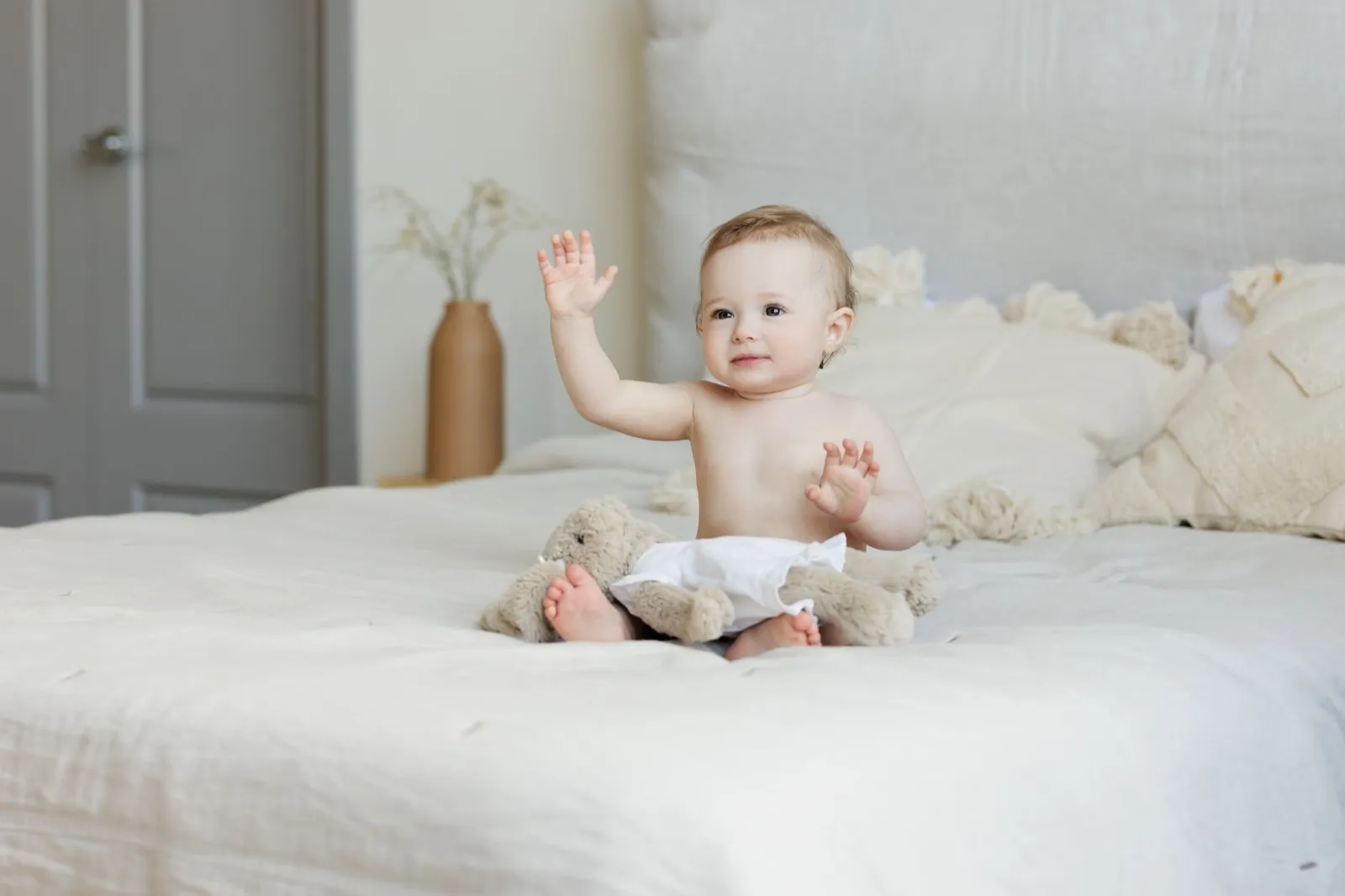
Image Credit: Pexels / Anastasiya Gepp
Learning to sit is a gradual process rather than a skill that appears on one particular day. Many babies begin by sitting with support, then use their hands to steady themselves before eventually sitting independently.
NHS children’s health guidance describes sitting with support and leaning on the hands while sitting as skills you may see at around 6 months. By around 9 months, sitting without support and getting into a sitting position independently are expected developmental milestones in NHS guidance.
Those ages are useful reference points, not deadlines. Babies develop at different speeds, and your baby’s overall progress matters more than comparing the exact week they sit with somebody else’s baby.
What age do babies start sitting up?
Sitting develops as your baby gains control and strength through their head, neck, shoulders and trunk, alongside the balance needed to stay upright.
At around 6 months, NHS children’s health guidance says babies may be able to sit with support and lean on their hands while sitting on the floor.
Independent sitting comes later. At around 9 months, NHS developmental guidance lists sitting without support and getting into a sitting position from lying down among expected physical milestones.
This means the period between roughly 6 and 9 months can involve a lot of practice and change. Your baby may initially need plenty of support, then manage a few wobbly moments alone before becoming much steadier.
There is no need to rush from one stage to the next.
What is supported sitting?
Supported sitting means your baby is upright but still receives help to maintain the position.
That support might come from you while your baby sits between your legs or on your lap. As balance improves, your baby may start using their own hands for support.
Cambridgeshire and Peterborough NHS children’s health guidance explains that supported sitting can help babies become familiar with being upright before they are ready to sit independently.
It also recommends practising sitting on a firm surface such as the floor or carpet rather than on a bed or cushion.
Your baby may wobble, lean or topple as they learn. Stay close and supervise them throughout practice.
When do babies sit without support?
Independent sitting means your baby can remain sitting without another person holding them in position.
NHS children’s health guidance lists sitting without support as a physical milestone at around 9 months. It also notes that babies at this stage may be able to get themselves into a sitting position from lying down.
Your baby will probably not go from needing full support to sitting perfectly upright for long periods.
Early independent sitting may last only briefly. With practice, babies gradually develop the balance and confidence to stay upright for longer and use their hands more freely for play.
If your baby is not independently sitting at the same age as another baby you know, that comparison alone does not tell you whether there is a problem.
Signs your baby may be getting ready to sit
Sitting relies on several physical skills developing together.
Before independent sitting becomes established, you may notice your baby:
- holding their head more steadily
- becoming stronger during tummy time
- pushing their upper body away from the floor
- sitting with support
- leaning forward onto their hands while sitting
- reaching towards toys while supported
- becoming better at controlling their trunk
- trying to regain balance when they lean
At around 6 months, NHS guidance describes babies pushing their chest from the floor with straight arms, sitting with support and leaning on their hands while sitting.
These developing skills help create the strength, coordination and balance needed for independent sitting.
They do not predict the exact day your baby will sit alone.
How tummy time supports sitting
Tummy time helps babies build the physical strength needed for later movement.
The NHS says tummy time strengthens muscles babies need for sitting and crawling. It should take place while your baby is awake and supervised.
As your baby lifts their head, pushes through their arms and moves during tummy time, they are working muscles through their neck, back, shoulders and upper body.
If your baby is not keen on tummy time, you are not alone. NHS guidance suggests trying tummy time on your chest or lap, putting toys within easy reach, talking or singing to your baby, or using a small rolled towel under their arms for support.
Short opportunities can be easier than trying to keep an unhappy baby in the position for a long stretch.
How to help your baby practise sitting
You do not need to teach sitting through a strict exercise routine.
Safe floor play and everyday movement give babies opportunities to develop the strength and balance they need.
When your baby is showing signs that they are ready, NHS children’s health guidance suggests supported sitting between your legs. Encouraging your baby to reach forward while supported can help them practise balance.
As your baby becomes more confident, toys can be placed in front of them to encourage reaching while sitting. Later, placing toys slightly further away can encourage them to stretch and adjust their balance.
Keep practice relaxed. If your baby is tired, frustrated or repeatedly collapsing because they are not ready, there is no benefit in forcing the position.
Why floor play matters
Babies need opportunities to move their bodies freely.
NHS physical activity guidance recommends encouraging babies who are not yet crawling to be active through reaching, grasping, pulling, pushing and moving their head, body and limbs during supervised floor play.
Floor play gives your baby room to experiment with movement without needing to stay in a fixed position.
The NHS also cautions against spending long periods in baby carriers and seats that prop babies into a sitting position, because this can delay their ability to sit independently.
A baby seat can be useful for practical reasons, but it does not replace opportunities for your baby to move freely and practise using their own muscles.
How to make sitting practice safer
A baby learning to sit is still learning how to fall.
Use a firm surface such as the floor or carpet and stay close enough to help if your baby loses balance. NHS children’s health guidance advises against practising sitting on a bed or cushion and recommends supervising babies while they learn to sit without support.
Keep the surrounding area clear of hard or sharp objects that your baby could fall against.
As sitting improves, your baby may suddenly be able to reach further than before. Look around the space from their level and move small, sharp, breakable or hazardous objects out of reach.
Development can change quickly, so a space that worked a few weeks ago may need another safety check.
Should I prop my baby up with cushions?
It can be tempting to build a ring of cushions around a baby who is learning to sit, but a firm floor gives them a stable surface for practice.
NHS children’s health guidance specifically advises using a firm surface such as the floor or carpet rather than sitting a baby on a bed or cushion.
Stay close and supervise instead of relying on soft furnishings to hold your baby in position.
For sleep, pillows and cushions should not be placed in a baby’s cot. NHS safer sleep guidance advises keeping pillows and duvets away from babies under 1 year because of the risk of suffocation.
What if my baby keeps falling sideways?
Wobbling is part of learning balance.
At first, your baby may lean heavily forward onto their hands or topple sideways when they reach for something. As their trunk control and balance improve, they may gradually become able to correct their position and sit for longer.
Practising on a firm floor while you stay nearby gives them a safer place to work on these skills.
If you notice that your baby consistently falls towards the same side, seems to use one side of their body very differently from the other, or you have another concern about their movement, speak to your health visitor or GP.
You do not need to decide whether the difference is significant yourself.
What comes after sitting?
Once your baby can sit independently, they have a new position from which to play and explore.
They may become better at reaching in different directions, moving toys between their hands and turning their body towards something interesting.
Some babies later begin crawling, bottom shuffling or finding another way to move. The NHS notes that not all babies crawl and gives around 7 to 10 months as a common period for crawling to begin.
Sitting is therefore part of a much wider pattern of physical development rather than simply a step that must be completed before the next milestone.
Try to let your baby explore movement at their own pace.
What if my baby is not sitting yet?
It is understandable to feel concerned if other babies of a similar age are already sitting confidently.
Developmental guidance is most useful when it helps you notice your baby’s progress, rather than when it becomes a source of constant comparison.
NHS children’s health guidance describes sitting with support at around 6 months and sitting independently at around 9 months as broad developmental expectations. It also stresses that every child is unique and develops at their own pace.
If your baby has reached an age where you expected them to be sitting and they are not, or if other aspects of their physical development concern you, speak to your health visitor or GP.
If your baby was born prematurely or has a condition affecting development or movement, follow the individual guidance provided by their healthcare team.
When to get professional advice
Speak to your health visitor, GP or another qualified healthcare professional if you are concerned about your baby’s ability to sit, their head or trunk control, how they move, or their development more generally.
It is particularly worth raising concerns if your baby loses a physical skill they could previously do, appears to use one side of their body very differently from the other, or you notice another persistent change in their movement.
NHS children’s health services advise parents to seek professional support if they have concerns about their child’s development.
You do not need to wait for a routine review if something is worrying you. A milestone guide can explain typical development, but a healthcare professional can consider your individual baby’s progress as a whole.
Related reading
Sources
- NHS: How to keep your baby or toddler active
- NHS: Physical activity guidelines for children under 5 years
- NHS Best Start in Life: Baby moves
- Cambridgeshire and Peterborough Children’s Health NHS: Learning to sit
- Bedfordshire and Luton Children’s Health NHS: 6 month developmental milestones
- Bedfordshire and Luton Children’s Health NHS: 9 month developmental milestones
- NHS: Baby and toddler safety