Baby Fine Motor Skills: How They Develop in the First Year
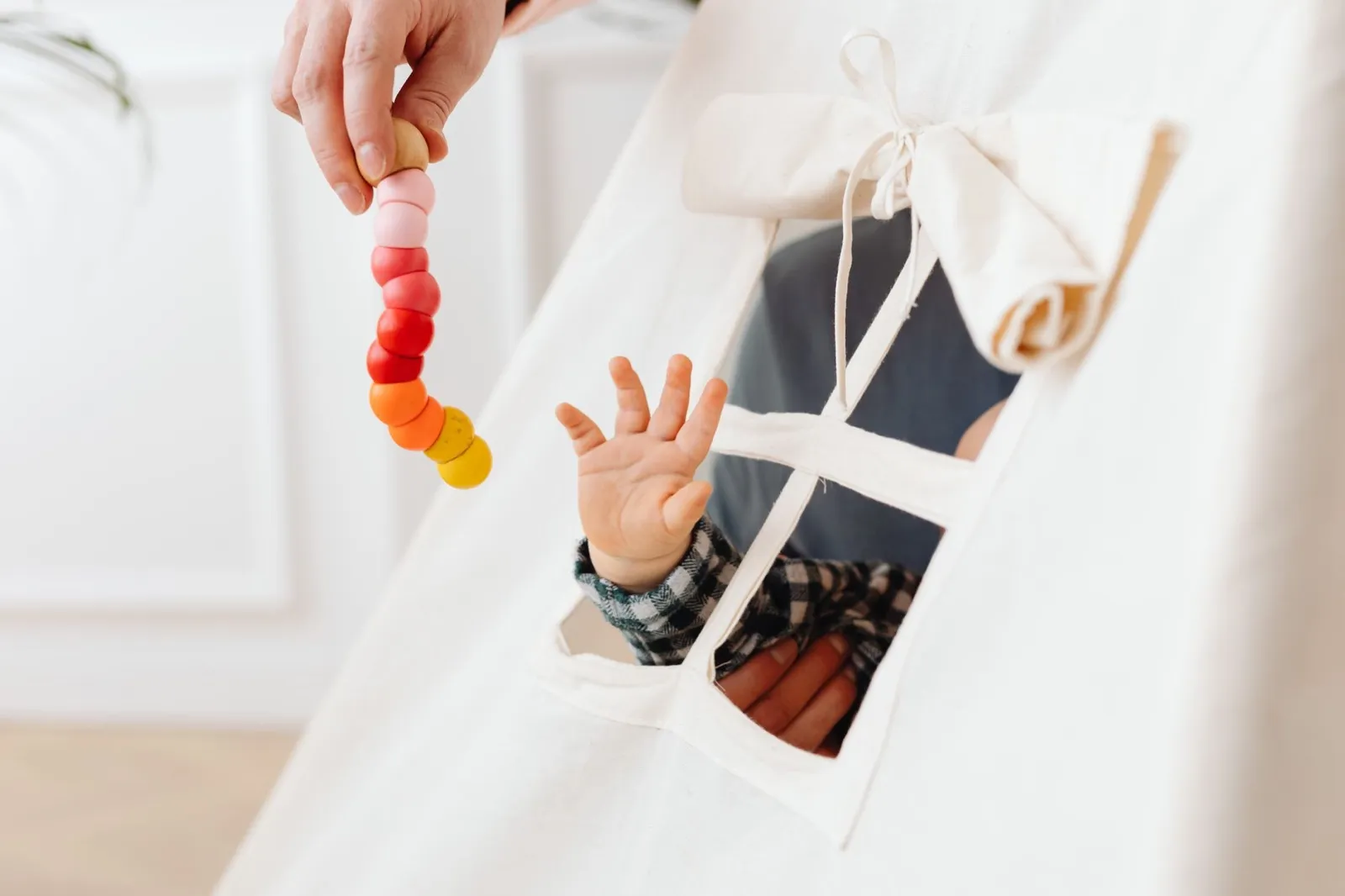
Image Credit: Pexels / https://kaboompics.com/
Baby fine motor skills develop gradually throughout the first year as your baby learns to control their hands and fingers with increasing precision. Early movements may be simple, such as briefly opening a hand or bringing hands towards the mouth. Later, babies begin reaching, grasping, transferring objects between their hands and eventually picking up small items with their thumb and fingers.
These changes can be fascinating to watch, but they do not happen on an identical timetable for every baby. Developmental milestones are useful reference points rather than a checklist your baby needs to complete on a particular day.
The most useful thing to watch is the overall pattern. Over time, your baby should gradually become more purposeful and coordinated in the way they use their hands to explore the world.
What are fine motor skills?
Fine motor skills are the smaller, more precise movements we make using the hands, wrists and fingers.
Somerset NHS Foundation Trust explains that fine motor skills depend on several abilities working together, including stable muscles and joints, hand-eye coordination, touch and the ability to plan movements.
For a baby, fine motor development starts with very simple actions. Over the first year, these skills gradually allow them to reach towards an object, hold it, move it between their hands and eventually use their fingers with greater precision.
Fine motor skills are different from gross motor skills, which involve larger movements such as rolling, sitting, crawling and walking. The two areas still develop alongside each other. For example, better sitting balance can leave a baby’s hands free to explore toys.
Fine motor skills from birth to around 3 months
A newborn does not have the controlled hand movements you will see later in the first year.
During the early months, babies are gradually becoming more aware of their bodies and developing control over their movements.
The US Centers for Disease Control and Prevention lists briefly opening the hands as a physical developmental milestone at 2 months.
You may also notice your baby moving their arms, bringing their hands towards their face or beginning to look at their own hands.
At this stage, there is no need for complicated toys or exercises. Close interaction and opportunities to move freely while awake give your baby plenty to experience.
Fine motor skills around 4 months
By around 4 months, hand movements often become more purposeful.
The CDC lists holding a toy when it is placed in the hand, using an arm to swing at toys and bringing hands to the mouth among common 4-month physical milestones.
You may notice your baby becoming interested in toys hanging nearby or trying repeatedly to make contact with something they can see.
Reaching can still be inaccurate. A baby may swipe at a toy several times before touching it.
NHS play guidance suggests placing toys near babies from around 4 months so they have opportunities to reach towards them.
This does not need to become a structured exercise. A few safe objects and time to explore are enough.
Fine motor skills around 5 to 6 months
As coordination improves, reaching and grasping can become increasingly deliberate.
The CDC identifies reaching to grab a wanted toy as a 6-month cognitive milestone. Babies at this stage also commonly explore objects by putting them in their mouth.
Hand skills are beginning to connect more closely with vision. Your baby can see something interesting, reach towards it and try to grasp it.
West London NHS children’s health guidance describes grasping toys with the whole palm of the hand as a typical skill at around 6 months.
You may notice your baby holding a toy more securely, turning it around or bringing it towards their mouth to investigate.
Mouthing is a normal way for babies to explore, but it also means anything within reach needs to be safe for them.
Fine motor skills around 7 to 9 months
During the second half of the first year, babies often become much more capable with objects.
West London NHS children’s health guidance describes transferring a toy from one hand to the other at around 7 months.
By 9 to 10 months, Berkshire Healthcare NHS Foundation Trust describes babies as beginning to pick up small toys with one hand, pass toys between their hands, bang two toys together and use their fingers in a raking movement to bring small items towards themselves.
The CDC also lists moving objects from one hand to the other among its 9-month physical milestones.
These skills can make play look much more intentional. Your baby may hold one object in each hand, bang them together, deliberately release something or repeatedly move a favourite toy from hand to hand.
Repeated actions are useful practice. Your baby is learning how their hands work and what happens to objects when they move, hit, drop or release them.
Fine motor skills around 10 to 12 months
Towards the end of the first year, finger movements can become increasingly precise.
West London NHS children’s health guidance describes picking up objects using the thumb and first finger, known as a pincer grip, at an average age of around 10 months.
Berkshire Healthcare NHS Foundation Trust similarly describes babies at around 9 to 10 months beginning to use the tips of the thumb and fingers to pick up small toys or food.
By 12 months, the CDC lists putting something into a container, such as a block into a cup, as a cognitive milestone.
These abilities open up new ways to play and explore.
Your baby may enjoy putting objects into containers and taking them out again. They may also become increasingly interested in picking up small items.
That new precision makes safety particularly important because tiny objects that were previously difficult to grasp may suddenly be easy for your baby to pick up.
What is the pincer grip?
The pincer grip is the ability to pick something up using the thumb and finger rather than grasping it with the whole hand.
It is a more precise movement than the earlier whole-palm grasp.
West London NHS children’s health guidance places the development of this grip at an average age of around 10 months, although individual babies vary.
You may first notice it during play or at mealtimes as your baby becomes able to pick up smaller pieces of food.
There is no need to train the pincer grip with tiny household objects. Babies who can pick up very small things can also put them into their mouth, creating a choking risk.
Use safe, age-appropriate toys and follow recognised feeding guidance for food.
How fine motor skills support self-feeding
Hand-eye coordination and grasping become increasingly useful as babies begin exploring food.
The NHS says that one sign a baby is ready to begin solid foods at around 6 months is being able to coordinate their eyes, hands and mouth so they can look at food, pick it up and put it into their mouth themselves.
The NHS also notes that offering suitable finger foods can help babies learn to self-feed and supports fine motor skills and hand-eye coordination.
Food safety matters. The size, shape and texture of food need to be appropriate, and babies should always be supervised while eating.
Fine motor development is only one part of readiness for solid foods. Follow NHS guidance rather than using grasping ability alone to decide when your baby should start.
Simple ways to support fine motor development
Babies develop hand skills through ordinary play and everyday interaction.
You do not need specialist equipment or a programme of exercises.
The NHS recommends encouraging babies who are not yet crawling to be active through movements including reaching, grasping, pulling and pushing during daily routines and supervised floor play.
Simple opportunities can include:
- placing a safe toy within reaching distance
- offering lightweight objects that are easy to grasp
- allowing your baby to hold and explore toys with both hands
- giving them opportunities to pass objects between their hands
- playing with safe objects that can be placed into and removed from containers
- singing simple action songs involving the hands
- letting your baby explore different safe textures
- sharing supervised mealtimes once they are developmentally ready for solid foods
Follow your baby’s interest. If they are absorbed in turning one toy around for several minutes, you do not need to interrupt them with a different activity.
Do babies need special fine motor toys?
No. Babies can practise fine motor skills with many simple, safe objects.
A toy that can be held, reached for, transferred or placed into a container may offer plenty of opportunities for hand practice.
NHS Best Start in Life guidance suggests encouraging babies to reach for, push and pull toys to support coordination.
The most important consideration is safety. Toys should be suitable for your baby’s age and should not contain small detachable parts that could become a choking hazard.
You do not need to continually buy new developmental toys. Familiar objects can remain interesting as your baby’s abilities change because they discover new ways to interact with them.
Why dropping everything is part of learning
Towards the end of the first year, you may find yourself repeatedly retrieving toys from the floor.
Although it can feel endless, dropping and releasing objects allows babies to explore what their hands can do and what happens when they let go.
Berkshire Healthcare NHS Foundation Trust describes deliberately putting down a small toy and releasing it as part of fine motor development around 9 to 10 months.
You do not have to return every dropped object immediately, especially during mealtimes when you are trying to keep things manageable.
The useful part is giving your baby safe opportunities to grasp and release objects during everyday play.
Fine motor development and baby safety
Improved hand control means your baby can reach and pick up increasingly small objects.
NHS baby safety guidance recommends keeping small objects such as buttons, coins and small toy parts out of a baby’s reach because they can cause choking.
Button batteries are particularly dangerous and should be kept well away from children.
Get into the habit of checking floors and low surfaces, particularly if older children are playing nearby with toys that contain small pieces.
Your baby’s reach can also change quickly. Something that was safely out of range a few weeks ago may become accessible once they can sit, stretch or move around.
What if my baby prefers one hand?
During the first year, you may occasionally notice your baby reaching more readily with one hand.
That does not necessarily mean they have developed a permanent hand preference.
What is more useful to watch is whether your baby uses both hands during everyday play and whether there is an obvious, persistent difference in movement between the two sides.
If your baby consistently avoids using one hand or arm, or you notice another difference that concerns you, speak to your health visitor or GP.
A healthcare professional can assess your baby’s movement in the context of their overall development.
What if my baby’s fine motor skills seem delayed?
It is easy to become concerned when another baby of a similar age is already picking up tiny objects or transferring toys confidently.
Development varies between babies. Berkshire Healthcare NHS Foundation Trust notes that factors including temperament, general health, premature birth and opportunities for play can influence development.
Look for gradual progress rather than expecting every skill to appear at the same age.
If your baby is not meeting developmental milestones, has lost a skill they previously had or you are concerned about how they use their hands, speak to a healthcare professional.
If your baby was born prematurely, their healthcare team may use corrected age when considering developmental progress.
When to get professional advice
Speak to your health visitor, GP or another qualified healthcare professional if you are worried about your baby’s hand movements, coordination or overall development.
Seek advice if your baby loses a skill they previously had, consistently appears unable or unwilling to use one hand or arm, or you notice another persistent difference in their movement.
You can also raise developmental concerns at your baby’s NHS health and development reviews.
You do not need to diagnose a delay yourself or wait until a concern becomes severe. A healthcare professional can look at your baby’s fine motor skills alongside their vision, movement and broader development and decide whether any further assessment or support is appropriate.
Related reading
- How to Support Your Baby’s Development Through Play
- When Do Babies Start Sitting Up?
- When Do Babies Start Crawling?
Sources
- NHS: Physical activity guidelines for children under 5 years
- NHS Best Start in Life: Baby moves
- NHS: Baby and toddler play ideas
- NHS: Your baby’s first solid foods
- NHS: Baby and toddler safety
- Somerset NHS Foundation Trust: Developing fine motor skills
- Berkshire Healthcare NHS Foundation Trust: Typical development
- West London Healthier Together: Hand skills
- Centers for Disease Control and Prevention: Milestone Moments