Best Toys and Activities to Support Toddler Development
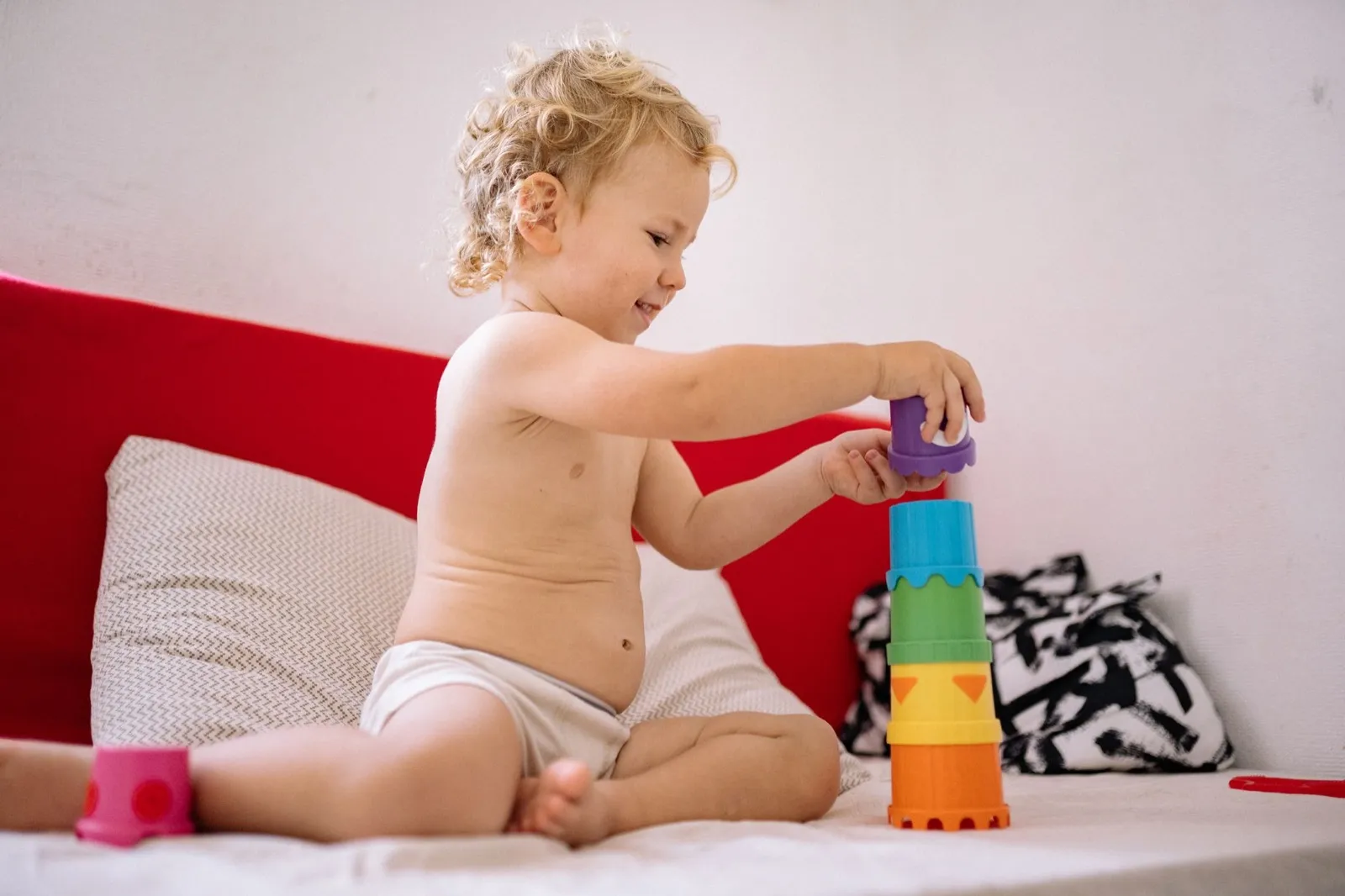
Image Credit: Pexels / Yan Krukau
The best toys for toddler development are often the simplest ones. Blocks, balls, books, crayons, pretend-play items and everyday household objects can give toddlers opportunities to practise movement, language, problem-solving, imagination and social skills.
Just as importantly, toddlers do not need a constant stream of new educational toys. NHS guidance explains that play does not need to be difficult or expensive, and that children can learn through ordinary objects and, especially, interaction with the people around them.
So rather than looking for one toy that promises to make your toddler smarter or more advanced, it can be more useful to offer a small variety of safe, age-appropriate play opportunities and follow your child’s interests.
What makes a good developmental toy for a toddler?
A useful toddler toy does not necessarily flash, talk or have an educational label on the box.
Often, toys that can be used in several different ways have the most staying power. A set of blocks might become a tower today, a road tomorrow and pretend food the following week.
Look for toys and activities that allow your toddler to do something rather than simply watch something happen. Depending on their stage and interests, this might involve:
- Stacking
- Sorting
- Filling and emptying
- Drawing
- Pretending
- Building
- Rolling
- Throwing
- Matching
- Turning pages
- Making sounds
- Moving their body
The NHS encourages parents and carers to follow a toddler’s lead during play. That means noticing what catches their attention and joining in rather than feeling you need to direct every activity.
Safety matters too. Check manufacturer age recommendations, inspect toys for damage and be cautious about small parts, loose batteries, magnets, cords and anything else that could present a hazard.
Building blocks and stacking toys
Blocks are a classic for good reason.
Stacking, knocking down and rebuilding gives toddlers opportunities to use their hands and coordinate what they see with what they are doing. As play develops, the same blocks can become houses, bridges, towers or part of a pretend game.
You can keep your involvement simple.
If your toddler is building, describe what you see:
“That tower is getting tall.”
“You put the blue block on top.”
If the tower falls, give them time to decide what to do next rather than immediately rebuilding it for them.
You do not need to quiz them on colours or numbers for the activity to be useful. Ordinary conversation is enough.
Choose blocks that are suitable for your toddler’s age and large enough not to present a choking risk.
Balls for movement and coordination
A simple ball can support active play in many ways.
The NHS recommends taking a ball to the park and practising throwing, catching and kicking, noting that these activities can help children practise coordination, balance and agility.
You can adapt ball play to your toddler’s current abilities.
Try:
- Rolling a ball backwards and forwards
- Kicking towards a simple target
- Throwing into a large container
- Chasing a gently rolled ball
- Carrying a ball while walking
- Playing together outdoors
There is no need to turn it into a structured sports session. Five minutes of rolling a ball across the floor can be plenty if that is what your toddler enjoys.
Books for language and communication
Books are one of the most versatile things you can keep within a toddler’s reach.
NHS guidance recommends looking at books together as a way to support language and communication. You can read the story, but you do not always have to finish every page.
Some toddlers want to point at pictures. Others want to turn pages quickly or hear the same book repeatedly.
Follow their attention.
You might say:
“There’s the dog.”
“The car is red.”
“Where do you think the bear is going?”
If your toddler responds with a sound, gesture, look or word, give them time. Conversation can grow naturally from whatever interests them on the page.
Libraries can also make books accessible without needing to buy new ones regularly.
Crayons, paper and simple art materials
Drawing and painting give toddlers opportunities to experiment with marks, colours and movement.
The NHS suggests crayons, felt tips and paint as play ideas from around 18 months, while emphasising that simple materials such as the inside of cereal boxes or opened-out envelopes can work as paper.
For younger toddlers, choose art materials specifically intended for their age group and supervise their use.
You could offer:
- Chunky age-appropriate crayons
- Large sheets of paper
- Washable children’s paint
- Chalk used in a suitable supervised setting
- Stickers appropriate for your child’s age
Try not to worry about producing a recognisable picture. Scribbling, making marks and experimenting are part of the activity.
Pretend-play toys
Pretend play does not require an elaborate toy kitchen or miniature supermarket.
A doll, teddy, toy cup, cardboard box or a few safe household objects can be enough to begin an imaginary game.
NHS guidance for children aged 2 to 3 recommends pretend play as one way to encourage creativity and language. A toddler might feed a teddy, pretend to cook, make a toy animal sleep or turn a cardboard box into a car.
Join in if invited, but let your toddler shape the game.
You can add simple language without taking over:
“Teddy looks hungry.”
“Where is the bus going?”
“Shall I have some pretend tea?”
Pretend play can change quickly. The spoon that was used for cooking a minute ago may suddenly become a microphone. That flexibility is part of the fun.
Puzzles and shape sorters
Simple puzzles and shape sorters can give toddlers small problems to investigate.
The useful part is not completing them as quickly as possible. It is experimenting with how pieces turn, where they fit and what happens when the first attempt does not work.
Choose puzzles designed for your child’s age and stage, with pieces that are safe for them to handle.
If your toddler struggles, try offering a small clue rather than immediately placing the piece yourself. You might rotate a piece slightly or point towards the correct area.
If they lose interest, put it away. There is no developmental benefit in forcing an activity that has become frustrating.
Toy animals, vehicles and figures
Small-world toys can support imaginative play and conversation as toddlers become ready for them.
Toy animals might visit a pretend farm. Cars can travel along a road made from blocks. Figures can go to sleep, eat dinner or ride in a cardboard-box bus.
These toys can also give you natural opportunities to introduce words.
You can name animals, describe movements and respond to whatever story your toddler creates.
Safety is especially important with small figures and accessories. Check the manufacturer’s age guidance and avoid pieces that could present a choking risk for your child.
Music and action songs
You do not necessarily need musical toys to make music part of play.
The NHS recommends songs and nursery rhymes as enjoyable ways to introduce young children to words and sounds and encourage activity.
Try singing familiar songs, clapping rhythms, dancing together or making simple sounds with safe household objects.
A wooden spoon and an upside-down plastic bowl can become a drum. A sealed, purpose-made children’s instrument can add another option if you want one.
Action songs can be particularly useful for combining movement and language.
Your singing does not need to be polished. For your toddler, the interaction is the important part.
Dressing-up and role play
As toddlers’ pretend play develops, dressing up can add another layer.
The NHS suggests items such as old hats, bags and suitable pieces of fabric for children from around 2 years, while warning parents to make sure there are no loose cords, strings or ribbons that could wrap around a child’s neck or cause a trip.
You do not need a box of expensive costumes.
A safe hat might turn someone into a shopkeeper. A bag can become part of a pretend trip. A tea towel might become part of an imaginative game under close supervision.
Always check anything borrowed from adult wardrobes for unsuitable fastenings, cords, small detachable pieces or other hazards before giving it to a toddler.
Water play
Water can keep toddlers fascinated with very simple equipment.
The NHS suggests using unbreakable items such as plastic bottles, sponges, funnels, spoons and containers for pouring and squirting.
This kind of play gives toddlers opportunities to fill, empty, squeeze and experiment.
It also requires very close supervision.
The NHS warns never to leave a baby or young child alone in the bath or while playing with water, because young children can drown in very shallow water.
Set everything up before you begin so you can stay close and attentive throughout the activity.
Cardboard boxes and everyday household objects
Some of the best toddler play materials are things you already have.
The NHS specifically recommends using ordinary household items and notes that play does not need to be expensive.
A large cardboard box can become:
- A car
- A boat
- A den
- A shop
- A bed for teddy
- A place for putting toys in and taking them out
Plastic bowls can be stacked. Wooden spoons can be used in pretend cooking. Socks can be sorted or turned into simple puppets.
Before handing over any household object, check that it is clean, sturdy and safe. Avoid sharp edges, breakable materials, small detachable pieces and anything containing accessible batteries or magnets.
Outdoor activities that cost nothing
Developmental play does not have to happen indoors or involve toys.
Walking, running, climbing, dancing and exploring outdoor spaces give toddlers opportunities to move and notice the world around them.
NHS Best Start in Life suggests activities such as walking, going to the park, dancing and playing with a ball.
A walk can become an activity simply by following your toddler’s attention.
You might:
- Look for leaves
- Listen for birds
- Jump over lines on the pavement
- Talk about buses and cars
- Find different colours
- Walk up a small hill
- Collect safe natural objects to examine together
Keep the environment and your child’s abilities in mind, particularly near roads, water, playground equipment or other hazards.
Simple activities for language development
You can support communication without buying anything specifically marketed as a language toy.
NHS Best Start in Life recommends chatting during everyday routines and following what your child is interested in.
Try:
- Looking at a book together
- Singing nursery rhymes
- Naming objects during play
- Talking while preparing food
- Giving simple choices
- Describing what your toddler is doing
- Playing pretend games
- Pausing to give them a chance to respond
For example, if your toddler is playing with a toy bus, you could talk about the wheels, passengers, colours or where the bus might be going.
The activity becomes richer through interaction rather than through the toy itself.
Activities for physical development
Toddlers need opportunities to move their whole bodies as well as practise smaller hand movements.
Active play might include:
- Walking
- Running
- Dancing
- Kicking a ball
- Throwing and rolling
- Climbing on suitable playground equipment
- Playing hide-and-seek
- Moving through a safe homemade obstacle course
For hand skills, toddlers might enjoy blocks, crayons, simple puzzles, posting toys and turning sturdy book pages.
Choose activities that match what your child can currently do. Development varies, and there is no need to rush them towards a skill simply because another child of a similar age is doing it.
Activities for thinking and problem-solving
Toddlers naturally encounter small problems during play.
How can the block tower stay standing? Which shape fits this hole? How can the toy be reached? What happens if water is poured into a different container?
You can encourage this kind of exploration without constantly giving instructions.
Provide a safe activity, observe and give your toddler time to try.
If they become stuck, offer enough help to keep the activity enjoyable. The aim is not to test them.
Open-ended toys such as blocks, containers and pretend-play objects work particularly well because there is often more than one way to use them.
Activities for social and emotional development
Play with a trusted adult gives toddlers opportunities to practise interaction, turn-taking and communication.
Simple games such as rolling a ball to each other or taking turns adding blocks to a tower introduce the idea that play can be shared.
Pretend play can also create opportunities to talk about feelings.
You might notice that a toy character looks sad, excited or cross. If your toddler is interested, you can name the emotion in simple language.
NHS guidance encourages parents to spend quality time interacting with toddlers and to follow their lead during play, helping build connection and confidence.
Not every play session needs a developmental goal. Enjoying being together matters too.
How many toys does a toddler actually need?
There is no magic number.
A toddler does not need a room full of toys to have varied play experiences. A smaller collection of versatile items can provide plenty to do, particularly when combined with books, outdoor activity, songs and ordinary household objects.
If too many toys seem overwhelming or are rarely touched, you could keep some away and rotate them occasionally. This is an organisational choice rather than something you need to do for development.
Focus on variety rather than quantity.
A few options for building, pretend play, books, drawing and movement can cover a lot of ground.
What to check before buying a toddler toy
Before buying a toy, ask a few practical questions:
- Is it suitable for my child’s age?
- Does it contain small detachable parts?
- Is the battery compartment secure?
- Could any cords or straps create a hazard?
- Is it sturdy enough for toddler play?
- Can it be cleaned if needed?
- Will my child actually be able to interact with it?
- Could we already do something similar with toys we own?
The NHS advises checking toy safety markings and being careful with second-hand toys or products from sources where safety standards may be uncertain.
Button and coin batteries deserve particular caution. UK Office for Product Safety and Standards guidance warns that swallowed button or coin batteries can cause severe internal injury. Products using them should have secure battery compartments, and spare or used batteries should be kept safely away from children.
If you think your child may have swallowed a button battery, official UK guidance says to go straight to A&E or call 999 for an ambulance.
When to get professional advice
Toys and play can provide useful opportunities for toddlers to practise developing skills, but they cannot diagnose or treat a developmental difficulty.
Children develop at different rates. If you are worried about your toddler’s movement, communication, hearing, vision, play, behaviour, social interaction or another aspect of their development, speak to your health visitor or GP.
You should also seek advice if your child loses skills they previously had or if something about their development continues to concern you.
You do not need to buy specialist developmental toys before asking for help. A health professional can listen to your concerns and advise whether any further assessment or support may be useful.
For everyday play, keep things simpler. A ball, a book, a few blocks, some crayons and your attention can offer a toddler a surprising amount to explore.
Related reading
- Toddler Development
- Toddler Cognitive Development: How Thinking and Learning Develop
- Toddler Social and Emotional Development: What to Expect
Sources
- NHS Best Start in Life: Playtime and bonding with your toddler
- NHS: Baby and toddler play ideas
- NHS Best Start in Life: First words and little sentences, 1 to 2 years
- NHS Best Start in Life: Chatting and building sentences, 2 to 3 years
- Office for Product Safety and Standards: Using button and coin batteries
- Office for Product Safety and Standards: Child safety, small hazards, big harm