Toddler Cognitive Development: How Thinking and Learning Develop
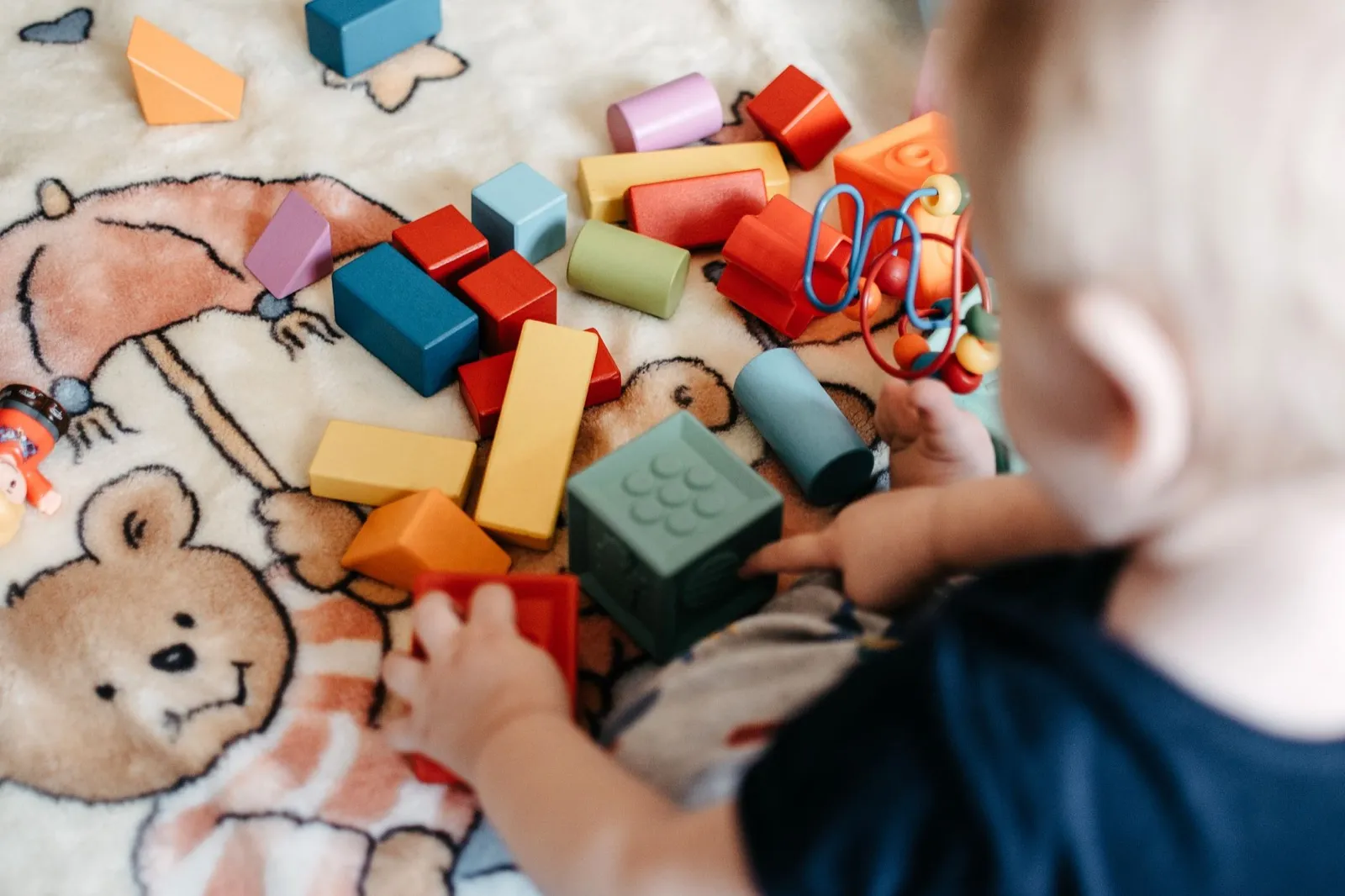
Image Credit: Pexels / Lisa Fotios
Toddlerhood can make a child’s growing mind suddenly feel very visible. Your toddler may remember where you hid something, copy an action they saw yesterday, work out how to reach a favourite toy or turn an ordinary cardboard box into a car.
These everyday moments are part of toddler cognitive development. Cognitive development describes how children learn to think, remember, understand, explore, solve problems and make sense of the world around them.
There is no need to turn everyday life into a programme of educational activities. Toddlers learn through ordinary experiences, especially play, conversation, repetition, exploration and interaction with the people around them. Development also varies between children, so individual skills are better viewed as part of a broader pattern rather than a test your toddler needs to pass.
What is cognitive development in toddlers?
Cognitive development covers a broad collection of thinking and learning skills.
During the toddler years, you may notice changes in your child’s ability to:
- Remember familiar people, places and routines
- Understand simple cause and effect
- Solve basic problems
- Match words with objects and actions
- Copy what other people do
- Use objects in increasingly purposeful ways
- Follow familiar routines
- Make choices
- Recognise patterns
- Use imagination during pretend play
- Pay attention to an activity for longer
- Understand simple concepts such as size, quantity and location
These abilities are closely connected with language, physical development and social skills.
For example, building a block tower involves more than hand control. A toddler may need to judge where a block should go, remember what happened when the previous tower fell and change their approach when something does not work.
Learning rarely fits neatly into one developmental category.
Toddlers learn by exploring
Toddlers are naturally curious. Opening cupboards, filling containers, dropping objects, pressing buttons and repeating the same action again and again may look simple, but these experiences give children information about how their surroundings work.
The NHS describes young children as learning through everyday interactions and play. Its Best Start in Life guidance encourages parents to notice what interests their child and follow their lead during play.
That can mean giving your toddler time to investigate rather than showing them the “correct” way to use every toy immediately.
If they are trying to fit a shape into a sorter, for example, you can allow them a little time to experiment before stepping in. Trying, adjusting and trying again is part of problem-solving.
Of course, exploration still needs safe boundaries. Toddlers do not yet understand many everyday dangers, so adults remain responsible for creating suitable spaces and supervising where needed.
Problem-solving develops through ordinary play
Problem-solving does not have to involve puzzles or special educational toys.
A toddler is practising problem-solving when they:
- Work out how to retrieve a toy from behind a cushion
- Try different ways to stack blocks
- Decide which shape fits into an opening
- Find a way around an obstacle
- Work out how a simple toy operates
- Try to open a container
- Choose what they need during pretend play
You can support this without immediately supplying the answer.
A simple comment such as “The teddy is stuck. What could we do?” gives your toddler an opportunity to think.
If they become frustrated, offer enough help to keep the activity manageable. The aim is not to make a task deliberately difficult. It is to give them opportunities to discover that they can try different approaches.
As children get older, NHS guidance suggests using simple everyday questions to encourage problem-solving, such as thinking together about what to do when a familiar object is missing.
Memory becomes increasingly noticeable
Toddlers can surprise adults with what they remember.
They may know which cupboard contains their cup, anticipate what happens after bath time or recognise the route to the park.
Familiar routines give children repeated opportunities to remember sequences. They gradually learn that certain events tend to happen in a predictable order.
Books and songs are useful here too. A toddler may start anticipating a favourite part of a story, filling in a familiar sound or requesting the same song repeatedly.
Repetition can feel monotonous for an adult, but it gives a young child another opportunity to practise remembering, predicting and participating.
You do not have to constantly introduce something new to make play worthwhile.
Language and thinking develop together
Language gives toddlers increasingly useful tools for organising and communicating their thoughts.
As they learn more words, they can identify objects, describe actions, make choices, ask for things and eventually explain increasingly complicated ideas.
NHS Best Start in Life recommends talking with children during ordinary routines such as meals, dressing and trips outside. Naming what a child sees and describing what is happening can connect words with experiences.
You might say:
“The banana is soft.”
“Your shoes go on your feet.”
“The bus is stopping.”
“You put the big block on top.”
This does not need to become constant narration. Natural conversation during things you are already doing is enough.
Reading together can also support thinking as well as language. You can talk about pictures, notice details and, as your child develops, wonder what might happen next.
Pretend play shows growing imagination
Pretend play can be one of the most obvious signs that a toddler’s thinking is becoming more flexible.
A child may pretend to feed a teddy, put a doll to bed, make an imaginary cup of tea or hold an object to their ear as though it were a phone.
Over time, pretend games can become more elaborate.
The NHS recommends simple pretend activities during the toddler years, such as dressing a teddy, having a teddy bears’ picnic or giving a doll a pretend bath.
You do not need to control the story.
If your toddler decides a wooden block is a cake, you can follow their idea rather than correcting them. Joining their imaginary world gives them space to practise using ideas and symbols in new ways.
Sorting, matching and early concepts
Toddlers gradually become more aware of similarities and differences.
During everyday play, they may begin noticing:
- Colours
- Shapes
- Sizes
- Numbers and quantities
- Matching objects
- Where objects belong
- Opposites such as big and small
- Spatial ideas such as in, under and on top
You can introduce these ideas naturally.
While tidying, you might put toy animals together. While getting dressed, you can talk about matching socks. At snack time, you can notice that one piece of fruit is bigger than another.
There is no need to quiz your toddler.
Hearing these concepts in context helps give meaning to the words.
Cause and effect is fascinating to toddlers
Toddlers often repeat actions because they are learning what happens next.
Push the button and a sound appears. Knock the tower and the blocks fall. Tip the cup and the water pours out.
This interest in cause and effect can explain some behaviours that adults find less charming too. A toddler who repeatedly drops a spoon from a high chair may be interested in the predictable result, including what happens to the spoon and how the adult responds.
Where an activity is safe, repetition can be useful learning.
You can describe what happened in simple language: “You pushed the tower and it fell down.”
That helps connect an action with its result.
Attention develops gradually
Toddlers are often described as having short attention spans, but attention depends heavily on the activity, environment and individual child.
A toddler may move quickly between activities and then spend a surprisingly long time investigating something that genuinely interests them.
Following your child’s interests can make shared play easier.
NHS guidance suggests being more like a narrator than a director during toddler play. Instead of constantly telling your child what to build or how to play, notice what they are already doing and respond to it.
This does not mean children should never be introduced to new activities. It simply recognises that curiosity is a powerful part of learning.
Simple activities that support toddler thinking
Supporting cognitive development does not require expensive toys.
Many useful activities are already part of family life.
Read picture books
Let your toddler look, point and turn pages. Talk about what catches their attention rather than feeling that you must finish every word on every page.
Build and knock down
Blocks, stacking cups and other suitable objects allow children to experiment with balance, size and cause and effect.
Play hiding games
Simple hiding and finding games use memory, attention and problem-solving.
Try pretend play
Toy animals, dolls, kitchen items or ordinary safe household objects can inspire imaginative games.
Sort everyday objects
Laundry, toys or safe kitchen items can become informal opportunities to notice colours, sizes and categories.
Sing familiar songs
Songs and rhymes combine memory, language, rhythm and anticipation.
Let them help
Simple participation in everyday routines can be rich in learning. A toddler might put clothes into a basket, stir ingredients with supervision or help place safe items on a table.
Explore outside
Leaves, puddles, stones, vehicles, animals and changing weather give toddlers plenty to observe and talk about.
The best activity is often one your toddler actually wants to engage with.
Do toddlers need educational toys?
Not necessarily.
A toy can be enjoyable and useful, but a high price or an “educational” label does not automatically make it better for cognitive development.
Open-ended objects can offer many possibilities. Blocks can become a tower, a road or pretend food. A cardboard box can become a hiding place, vehicle or container.
Ordinary interaction matters too.
The NHS emphasises chatting, reading, playing and engaging with what interests young children as useful ways to support early learning and development.
If your toddler loves a particular toy, there is no reason to avoid it simply because it looks uncomplicated. Repeatedly working out how something functions can be meaningful play.
Should you correct your toddler when they get something wrong?
Constant correction is rarely necessary during exploratory play.
If your toddler calls every four-legged animal a dog, for example, you can respond naturally with the correct word rather than turning the moment into a test.
Similarly, if a tower collapses, you do not always need to rebuild it for them. They may want to examine what happened and try again.
There are times when intervention is necessary, especially for safety or when frustration has become overwhelming.
Otherwise, allowing some trial and error gives toddlers space to experiment.
Screens and toddler learning
Screens can attract a toddler’s attention very effectively, but they are not a replacement for interaction and hands-on play.
Current NHS Best Start in Life guidance advises avoiding screen time for children under two where possible. If screens are used, the NHS recommends shared activities that encourage interaction and bonding.
For children aged two to five, NHS guidance recommends limiting screen time and choosing suitable content.
Guidance can change, so parents who want specific recommendations should check the current NHS advice rather than relying on old rules or social media posts.
The wider point is simple: toddlers learn a great deal by interacting with people and physically exploring the real world.
Avoid turning development into a performance
Once you know that everyday activities support learning, it can be tempting to optimise every moment.
You do not need to.
A trip to the supermarket can simply be a trip to the supermarket. Your toddler does not need flashcards during breakfast or a learning objective attached to bath time.
Children need opportunities to play freely as well as interact with adults.
Some days you may spend lots of time reading, talking and playing together. Other days may be busy, tiring or chaotic.
Development is built across countless ordinary experiences, not one perfectly planned afternoon.
When to get professional advice
Children develop at different rates, but speak to your health visitor, GP or another qualified professional if you are concerned about your toddler’s development, learning, communication or behaviour.
It is also worth seeking advice if your child loses skills they previously had or if you feel they are having persistent difficulty engaging, communicating or learning in ways that concern you.
If your child attends nursery or another early years setting, staff may be able to share what they have observed and discuss any support already in place.
NHS Best Start in Life advises parents to ask their health visitor for support if they feel their child needs extra help. Depending on the concern, a health visitor may suggest other services or professionals who can assess and support a child’s development.
You do not need to decide whether a concern is “serious enough” on your own. If something about your toddler’s development is worrying you, asking a qualified professional is appropriate.
Toddler cognitive development happens in hundreds of small moments. Every time your child experiments, remembers, pretends, investigates or tries a different solution, they are learning something about how the world works. Giving them time to play, explore and interact with you is already a meaningful way to support that growing mind.
Related reading
- Toddler Development
- Toddler Development: Milestones and Stages from 1 to 3 Years
- How to Support Your Toddler’s Development Through Everyday Play