Heat Styling Hair Guide: How to Reduce Damage from Hot Tools
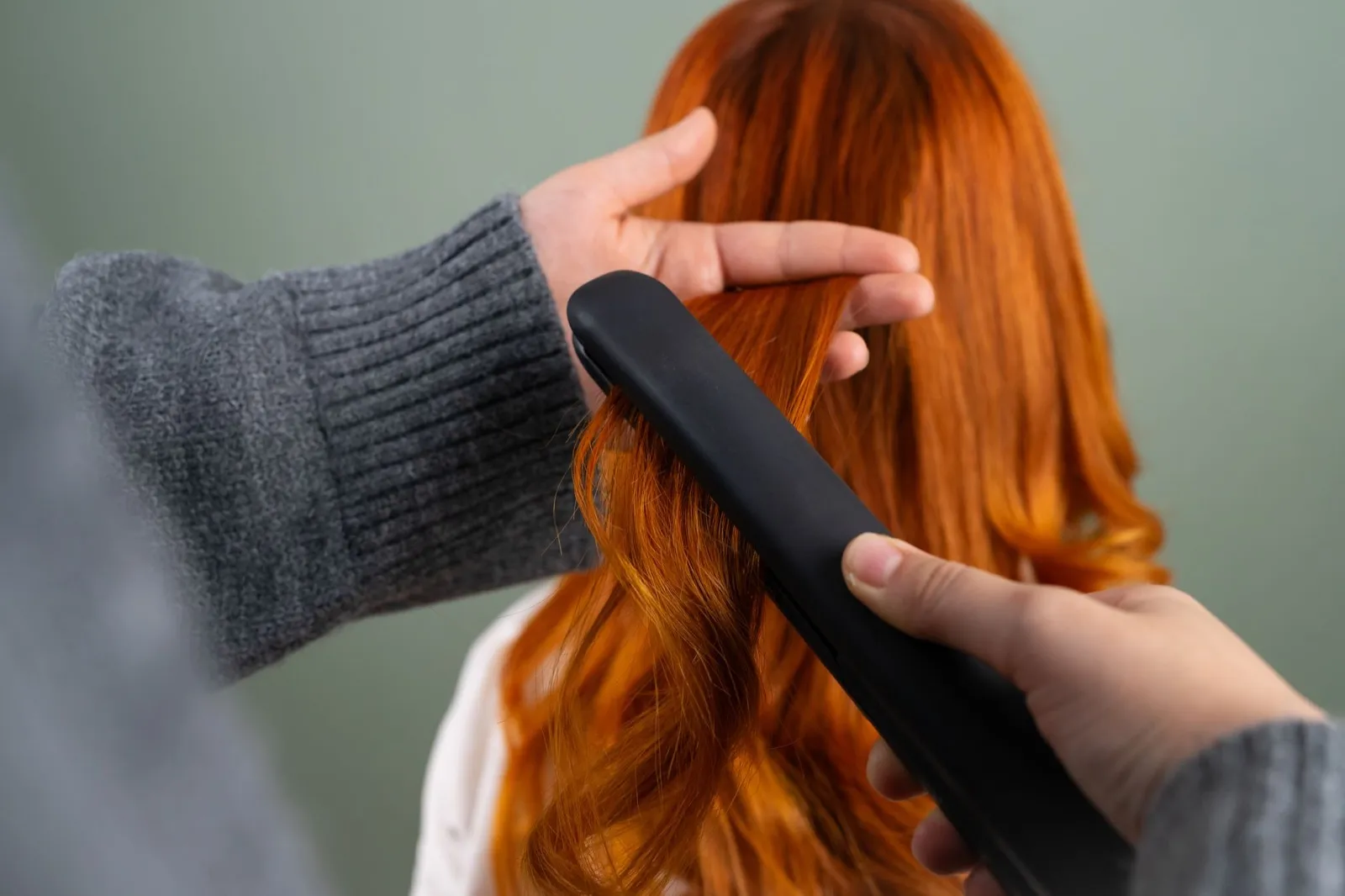
Image Credit: Pexels / Beyzanur K.
Heat styling can temporarily straighten, curl, smooth or add volume, but frequent or excessive heat may weaken hair. Use hot tools less often, apply a genuine heat protectant and choose the lowest temperature that produces the result you need.
Hair should be fully dry before traditional straighteners or curling irons. Work in manageable sections and avoid repeated passes over the same area.
Fine, bleached, chemically treated or damaged hair usually needs less heat than thick, coarse and untreated hair. No temperature is damage-free, and heat protectant reduces risk rather than removing it.
Stop if hair snaps, feels gummy when wet or smells burnt. If a tool burns skin, use cool or lukewarm running water for 20 minutes. Do not apply ice, butter or oil. Seek medical advice for significant burns, blistering or burns involving face or eyes.
What is heat styling?
Heat styling uses a heated tool or warm airflow to change hair shape or appearance. Tools include hairdryers, straighteners, curling irons, wands, hot brushes, heated rollers, hot combs, multi-stylers and steam straighteners.
Heat changes temporary bonds within hair. The same heat can remove moisture and damage the protective cuticle, particularly at high temperature or with repeated passes.
How does heat damage hair?
Excessive heat may cause dryness, roughness, reduced shine, split ends, tangling, breakage, increased porosity, frizz, curl-pattern changes and wet-hair weakness.
Very high temperatures may damage proteins that give hair strength. Severe damage cannot heal like skin; conditioners, masks and bond products improve appearance but affected sections must grow out or be trimmed.
What does heat-damaged hair look like?
Possible signs include repeated split ends, short broken strands, roughness after conditioning, loss of elasticity, snapping, curls that do not return after washing, persistent straight sections, tangling, burnt smell, white spots, thin ends, excessive stretching or gummy hair when wet.
One difficult styling day does not prove permanent damage. Product build-up, humidity and dryness can also affect hair. Persistent changes after several washes are more concerning.
What does heat protectant do?
Heat protectant creates a layer that may reduce moisture loss, friction and surface damage and help tools move smoothly.
It does not make high heat harmless, prevent all breakage, repair split ends, allow unlimited daily styling, replace conditioner or protect severely damaged hair.
Choose a product clearly labelled for heat protection. An ordinary oil, leave-in or styling cream is not automatically a heat protectant.
Choosing and applying heat protectant
Heat protectants come as sprays, creams, lotions, serums, mousses, leave-ins and blow-dry primers.
- Fine hair: lightweight spray, mousse or mist
- Thick or coarse hair: cream, lotion or serum in sections
- Curly or coily hair: moisturising formula suited to diffusing or straightening
- Bleached or damaged hair: fragile-hair formula and lower heat
Divide hair into sections, apply evenly to lengths and ends and comb through gently if appropriate. Allow dry-hair formulas to settle. Ensure hair is fully dry before straightening or curling.
Do not make hair soaking wet, sticky or coated with product before using heat.
Does hair oil protect against heat?
Some formulated oils contain tested heat-protective ingredients, but ordinary oil is not automatically protective. Pure oil before high heat may create uneven heating.
Use a labelled protectant before styling. A small amount of oil may be used after styling for shine, flyaways, dry ends or softening a gel cast.
What temperature should you use?
There is no single safe temperature. Consider strand thickness, condition, bleaching, chemical treatments, texture, tool, frequency and how quickly hair responds.
Use the lowest effective setting:
- Fine, fragile or bleached hair: low heat
- Medium, healthy hair: low to medium
- Coarse, thick or resistant hair: medium first, increasing only if necessary
Temperatures near 230°C are extremely high and increase risk, especially for fine, bleached or chemically treated hair. Lower heat with smaller sections and good preparation is usually better than maximum heat.
How often can you heat-style?
There is no risk-free frequency. Occasional styling is generally less damaging than daily high heat.
Include heat-free days, avoid restyling the same section, use lower heat for touch-ups, preserve styles overnight, style only areas needing attention and stop if breakage increases.
Fragile, bleached or damaged hair may need a complete break.
How to blow-dry with less damage
Squeeze water out, blot with microfibre or cotton rather than rubbing, apply protectant and allow partial air-drying where practical.
Then divide hair, use low or medium heat, keep the dryer moving, maintain distance, direct airflow down the shaft, increase airflow before temperature and stop once dry.
Continuing to heat already dry hair adds exposure without removing water.
Air-drying avoids direct heat but is not always best. Very thick hair may stay damp for hours, and wet hair is vulnerable to friction. A low or medium blow-dry may be more practical.
How to use straighteners safely
Traditional straighteners should be used on fully dry hair.
- Shampoo and condition as needed.
- Detangle gently.
- Apply heat protectant.
- Dry completely.
- Divide into manageable sections.
- Start at low temperature.
- Use thin enough sections for even contact.
- Move smoothly below the roots.
- Avoid stopping in one place.
- Aim for one controlled pass.
If you hear sizzling, stop; hair may be damp or carrying too much wet product.
How to use curling irons and wands
Use clean, dry, detangled hair. Apply protectant, choose the lowest effective setting, divide sections, use manageable pieces, keep the tool away from scalp, avoid holding too long and allow curls to cool before brushing.
Use a heat-resistant glove if supplied and keep tools on a stable heat-resistant surface.
Heated rollers may still damage hair if too hot or tight. Hot brushes combine heat with pulling, so use gentle tension.
How to diffuse curls
Apply styling products and protectant if needed. Use low or medium heat and low or moderate airflow. Hover around roots first, cup sections gently and stop when nearly dry.
High airflow can disturb clumps and increase frizz. Do not press a hot diffuser against scalp for a long time.
Heat styling different hair types
Fine hair
Use lightweight protectant, low heat, small sections, fewer passes and short contact time. Mousse, setting spray, rollers and heatless curls may provide hold without increasing temperature.
Thick or coarse hair
Work in sections with enough protectant, strong clips, controlled airflow and medium heat to begin. More density means more sections, not necessarily maximum temperature.
Curly or coily hair
Condition thoroughly, detangle gently, use leave-in if suitable, protectant, dry in sections and choose the lowest effective temperature. Avoid repeated hairline touch-ups.
Bleached or coloured hair
Use low heat and reduce frequency. Do not style if hair is gummy, extremely stretchy, brittle, snapping or significantly thinner at ends.
Making a heat-styled look last
Use suitable mousse or setting spray, let curls cool, use flexible hairspray, protect from rain and steam, sleep on smooth fabric, wrap straight hair gently, use a pineapple for curls, wear a bonnet, use dry shampoo sparingly and touch up only selected areas.
Changing style may be gentler than recreating it every morning.
Heatless alternatives
Try overnight braids, foam rollers, flexi rods, pin curls, curling ribbons, sock curls, twist-outs, braid-outs, Bantu knots, Velcro rollers, wrapping or loose buns.
Use slightly damp rather than soaking wet hair. Do not wrap tightly or sleep with hard accessories pressing on the scalp.
Caring for heat-damaged hair
Pause or reduce hot tools. Use gentle shampoo, conditioner after every wash, leave-in, careful detangling, a mask if suitable, protein if tolerated, bond-supporting treatment if desired, serum on ends, heat-free styling and gradual trimming.
Protein may help hair that is overly soft, stretches or breaks, but reduce use if hair becomes stiff, rough, brittle or difficult to detangle.
Bond treatments may improve feel and manageability but do not make further high-temperature styling safe.
You do not need to remove all damage at once. Gradual trimming can manage split ends, thin ends, tangling and uneven breakage.
Cleaning and safely storing tools
Switch off, unplug and fully cool tools before cleaning. Follow manufacturer instructions, keep water away from electrical parts and allow tools to dry before reconnecting.
Stop using tools with exposed wires, cracked casing, loose parts, damaged plates, unusual smells, sparks, unstable temperature or an excessively hot plug.
Place hot tools on heat-resistant surfaces, away from water, aerosols, flames, children and pets. Unplug after use and never leave unattended.
What to do after a heat-tool burn
Move away from the heat and place the burn under cool or lukewarm running water for 20 minutes. Remove nearby jewellery or clothing only if not stuck.
Do not use ice, butter or oil. Cover loosely with clean cling film or a sterile non-fluffy dressing. Do not pull away material stuck to the burn.
Seek urgent assessment for deep, white or charred, large or blistered burns, burns to face, eyes, hands or genitals, burns around a limb, increasing pain, swelling or infection. Call emergency services for severe burns, faintness, confusion or breathing difficulty.
Common heat-styling mistakes
Avoid maximum temperature, straightening damp hair, skipping protectant, using sections too large, holding tools still, repeated passes on ends, daily heat, too much product, ignoring burnt smells, dirty tools and styling damaged hair as usual.
When to get professional help
Speak to a hairdresser experienced with damaged hair if hair breaks, curl pattern changes, bleached sections feel gummy, ends become thin or you need a lower-heat routine.
Speak to a GP or dermatologist about sudden loss, bald patches, widening parting, progressive thinning, edge loss, scalp pain or burning, scale, crusting, pus, rash, shiny areas without hair or shedding for months.
Seek prompt advice if the scalp is burned, blistered or increasingly painful, warm or swollen. Seek urgent help for a serious burn, eye injury or breathing difficulty.
Related reading
- Haircare Guide: How to Build a Healthy Hair and Scalp Routine
- Hair Types Guide: How to Identify and Care for Your Hair
- Curly Hair Care Guide: How to Wash, Style and Define Your Curls
- Hair Colour Guide: Choosing, Dyeing and Caring for Coloured Hair